

Get quote
Get Free Consultation!
We are ready to answer right now! free consultation.
Buyers searching for corrugated roof sheet supplier usually need a product decision that can survive real installation, inspection and shipping. The first screen should answer three questions: what product family is suitable, what site condition it fits, and what must be confirmed before production. For this topic, the strongest facts available from the site are the product category page, the project supply page, and the factory information describing specification review, inspection, packing and export coordination.
Beitong Hengda Traffic positions itself as an original manufacturer for guardrails, sign structures, bridge railings, power tower steel, galvanized sheet materials and custom metal safety components. For a buyer, that matters because corrugated roof sheets, PPGI coils, galvanized color coated sheets, cut-to-length flat steel sheets often need to be checked with coating, fittings, packing and shipment evidence as one package.
corrugated roof sheet supplier research should start with the actual product family, not a loose catalog name. On this site, the relevant product range is shown under Beitong Hengda Traffic’s product categories, where corrugated roof sheets, PPGI coils, galvanized color coated sheets, cut-to-length flat steel sheets are presented as export-ready infrastructure products rather than isolated parts.
The useful buying question is whether the product fits the project condition. corrugated roof sheets may be the main item, but the order usually depends on related details such as corrugated sheet profile, color coated surface, sheet length confirmation. If those details are missing, two offers that look similar can describe very different shipments.
| Product option | Where it fits | Buyer check |
|---|---|---|
| corrugated roof sheets | roofing sheet supply | profile shape, sheet length, color finish, substrate choice, packing method and whether flat sheets or coils are also required |
| PPGI coils | industrial cladding | Match it with color coated surface and confirm packing before shipment. |
| galvanized color coated sheets | warehouse roof replacement | Match it with sheet length confirmation and confirm packing before shipment. |
| cut-to-length flat steel sheets | distributor sheet stock | Match it with coil-to-sheet processing and confirm packing before shipment. |
| GI sheets | roofing sheet supply | Match it with protective export packing and confirm packing before shipment. |
The right use case for corrugated roof sheet supplier is narrower than the keyword may suggest. It is suitable for roofing sheet supply, industrial cladding, warehouse roof replacement, distributor sheet stock. It is not the best choice for road safety barrier work where beam strength, post matching and impact behavior are the main design requirements. That distinction helps buyers avoid forcing one product family into every road, utility or sheet metal problem.
PPGI coil feedstock for corrugated roof sheet production should be reviewed before price comparison. A buyer should ask whether the product is standard, drawing-based or custom. Standard items are easier to repeat, while drawing-based items need clearer confirmation of size, holes, coatings and packing marks. For mixed orders, the same review should include adjacent products such as PPGI coils, galvanized color coated sheets, cut-to-length flat steel sheets.
Cut-to-length flat steel sheet beside roofing profiles is where small differences become expensive. Surface finish, hole position, board layout, post spacing, sheet length or tower component marking may look like small details, but they decide whether the product can be installed without field modification. A buyer should confirm these details in writing and keep them consistent across the packing list.
This checklist is practical because many purchasing mistakes happen before production starts. If the buyer only sends a short item name, the supplier must guess the finish, accessory scope and packing method. If the buyer sends the application, specification and quantity structure, the factory can match the product family more reliably.
Quality control for corrugated roof sheet supplier should be visible enough for a remote buyer to understand what has been checked. The project page describes inspection from material to shipment, while the about page emphasizes production, surface treatment, inspection and packing. Those site facts support a buyer-facing process: confirm drawings or specifications, check surface treatment, verify quantities, then review packing and loading evidence.
Color coated sheet surface protection in loading should be handled as part of product quality. Coated surfaces can be marked during rough handling, small hardware can be lost if it is not boxed and labeled, and long parts can be difficult to unload if the bundle order is unclear. For corrugated roof sheets, the buyer should ask how the related PPGI coils, galvanized color coated sheets, cut-to-length flat steel sheets will be packed in the same shipment.
Export packing should also match the receiving team’s job. Contractors often unload by section, while distributors unload into stock. That means labels, bundle grouping and accessory cartons need to be understandable after the container is opened, not only in the factory yard.
Avoiding these mistakes does not make the purchase complicated. It simply means the buyer defines the project first and lets the product list follow the site condition. That is especially important when the shipment combines road safety steel, utility structures and galvanized sheet materials.
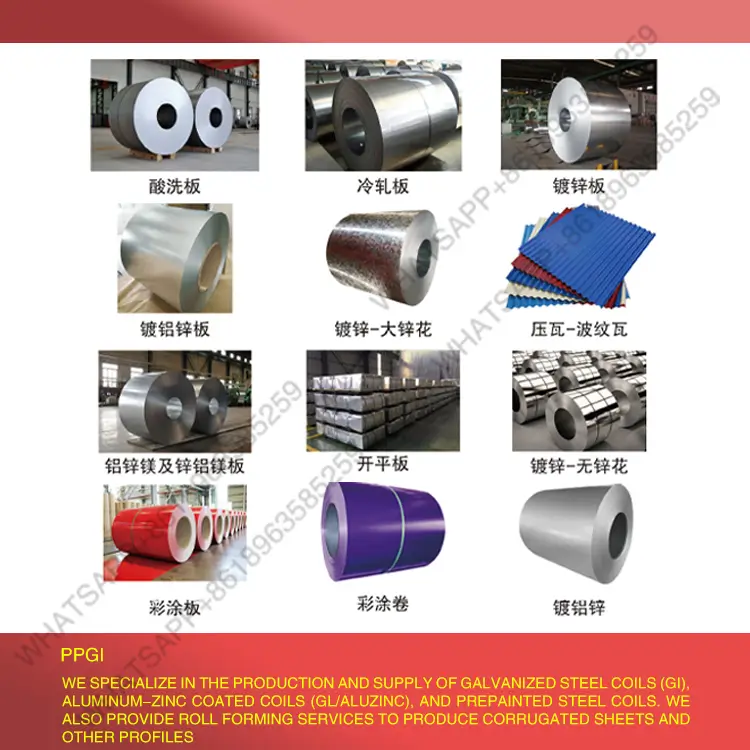
This topic is supported by the site’s real product information because the product category page directly lists corrugated roof sheets, PPGI coils, galvanized color coated sheets, cut-to-length flat steel sheets, GI sheets. The about and project pages add factory context: manufacturing origin since 1996, a 35,000m2 industrial park, 200,000t annual production capacity, custom drawing support, hot-dip galvanized options, inspection and export coordination. Those facts are enough to write buyer guidance without inventing case names, certificates or customer data.
The article should not claim a fixed stock quantity, certified standard or country-specific approval unless the buyer provides those documents. It can, however, explain how to compare corrugated sheet profile, color coated surface, sheet length confirmation, how to prepare a product list, and when another product family on the site is a better fit.
Send the application, quantity, drawing or size, required surface finish, packing expectation and destination. If the product connects with PPGI coils or galvanized color coated sheets, include those items in the same schedule so the factory can check compatibility.
Choose a custom specification when the site has unusual dimensions, a visible city design requirement, a special utility drawing, a restricted road section or a coating requirement that standard stock cannot satisfy. Custom work should be approved before production, not corrected during installation.
Yes, the site presents multiple related product families, so buyers can plan mixed shipments. A combined shipment may include guardrails, sign structures, bridge railings, tower parts, coated sheets or custom fittings, as long as the packing plan keeps heavy and surface-sensitive items separated.
A good purchase decision starts with the installation problem, then moves to the product name. For corrugated roof sheet supplier, confirm the application, the product family, the coating or finish, and the packing method before comparing offers. If those four points are clear, Beitong Hengda Traffic’s product range gives buyers a practical route from product selection to factory inspection and shipment review.
For distributor stock, separate fast-moving standard items from project-specific parts. corrugated roof sheets may be ordered repeatedly, but PPGI coils, galvanized color coated sheets, cut-to-length flat steel sheets often depend on project drawings, local installation habits or finish requirements.
For contractors, the strongest schedule is one that mirrors installation. Group products by road section, utility area, sheet profile or public-area location. This makes it easier to match packed bundles with the work sequence on site.
For export buyers, photos matter because they reduce uncertainty before the shipment leaves the factory. Ask for product photos, surface finish photos, packing labels and loading order when the order includes several product types.
For custom work, avoid approving production from a product name alone. A short drawing, a marked photo or a table of dimensions gives the factory a clearer basis for checking holes, posts, boards, sheet length, tower sections or barrier transitions.
When a project includes both road safety and metal sheet products, keep the packaging logic separate. Heavy tower or guardrail parts should not damage coated sheet surfaces, and small hardware should be labeled so it is not lost during unloading.
If the buyer is replacing an existing system, field photos and measurements are valuable. They help confirm whether the new product should match an older post, board, sheet profile, barrier connection or railing style.
The lowest offer is not always the lowest project cost. Missing brackets, wrong finish, unclear packing or mismatched accessories can create delays that cost more than the original price difference.
For distributor stock, separate fast-moving standard items from project-specific parts. corrugated roof sheets may be ordered repeatedly, but PPGI coils, galvanized color coated sheets, cut-to-length flat steel sheets often depend on project drawings, local installation habits or finish requirements.
For contractors, the strongest schedule is one that mirrors installation. Group products by road section, utility area, sheet profile or public-area location. This makes it easier to match packed bundles with the work sequence on site.
For export buyers, photos matter because they reduce uncertainty before the shipment leaves the factory. Ask for product photos, surface finish photos, packing labels and loading order when the order includes several product types.
